
 English
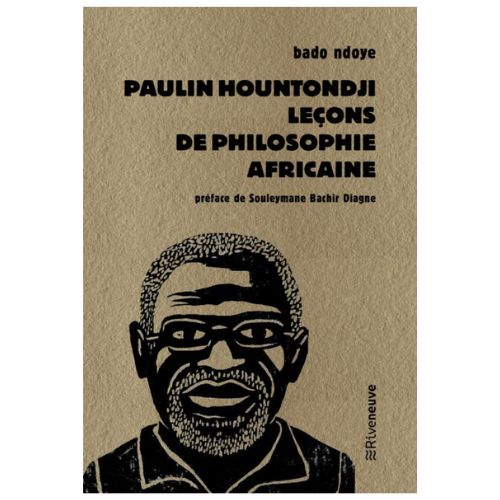
Paulin Hountondji. Leçons de philosophie africaine



11,90 €
- Auteur: Bado Ndoye
- Maison d’édition: Riveneuve Editions
- ISBN: 9782360136513
- Catégorie: Litterature
- Genre: Essai
- Langue: Français
- Paulin Hountondji, béninois né en 1942 à Abidjan, est l’un des philosophes africains les plus influents de ces cinquante dernières années. Sa vive critique de ce qui se présente comme « philosophie africaine » chez le prêtre Placide Tempels et les auteurs qui adoptèrent la démarche « ethnophilosophique » du missionnaire belge s’inspire de la pensée du philosophe allemand Edmund Husserl. Selon lui, la pensée philosophique doit prendre son point de départ non pas dans les représentations mais dans les problèmes, lesquels définissent alors la démarche pour les formuler.
(SEE ENGLISH TEXT BELOW)
🎉 Offre Bookinez : -5% dès 5 articles identiques achetés (hors promotions).
(SEE ENGLISH TEXT BELOW)
- Auteur: Bado Ndoye
- Maison d’édition: Riveneuve Editions
- ISBN: 9782360136513
- Catégorie: Litterature
- Genre: Essai
- Langue: Français
- Paulin Hountondji, béninois né en 1942 à Abidjan, est l’un des philosophes africains les plus influents de ces cinquante dernières années. Sa vive critique de ce qui se présente comme « philosophie africaine » chez le prêtre Placide Tempels et les auteurs qui adoptèrent la démarche « ethnophilosophique » du missionnaire belge s’inspire de la pensée du philosophe allemand Edmund Husserl. Selon lui, la pensée philosophique doit prendre son point de départ non pas dans les représentations mais dans les problèmes, lesquels définissent alors la démarche pour les formuler. La pensée de Hountondji s’inspire ainsi du Husserl qui, rompant avec l’idéalisme de ses premiers écrits, inscrit la philosophie dans « le monde de la vie » et des cultures humaines. Ainsi est-on conduit à poser la question de l’universel et à en redéployer le sens dans une perspective qui ne privilégie plus les cultures occidentales et « l’humanité européenne ». Sur cette question, ce livre montre comment Hountondji a anticipé une bonne partie des débats contemporains, en ayant aussi été l’un des premiers à avoir clairement énoncé le projet philosophique d’une refondation des savoirs endogènes africains.
_______________________________________
Paulin Hountondji: Lessons in African Philosophy
- Author: Bado Ndoye
- Publisher: Riveneuve Editions
- ISBN: 9782360136513
- Category: Literature
- Genre: Essay
- Language: French
- Paulin Hountondji, born in Abidjan, Benin in 1942, is one of the most influential African philosophers of the last fifty years. His sharp critique of what is presented as « African philosophy » in the work of the priest Placide Tempels and the authors who adopted the « ethnophilosophical » approach of the Belgian missionary is inspired by the thought of the German philosopher Edmund Husserl. According to him, philosophical thought must take its starting point not in representations but in problems, which then define the approach to formulating them. Hountondji’s thought is thus inspired by Husserl, who, breaking with the idealism of his early writings, situates philosophy within the « life-world » and human cultures. This leads us to question the universal and redeploy its meaning from a perspective that no longer privileges Western cultures and « European humanity. » On this point, this book demonstrates how Hountondji anticipated many contemporary debates, having also been one of the first to clearly articulate the philosophical project of a refounding of indigenous African knowledge.
Seuls les clients connectés ayant acheté ce produit ont la possibilité de laisser un avis.
Plus d'offres pour ce produit!
Questions et demandes générales
Il n'y a pas encore de demandes de renseignements.
Produits similaires



204,95 €

49,96 €

Rupture de stock
77,26 €

Rupture de stock
42,50 €

36,55 €

Rupture de stock

Avis
Il n’y a pas encore d’avis.